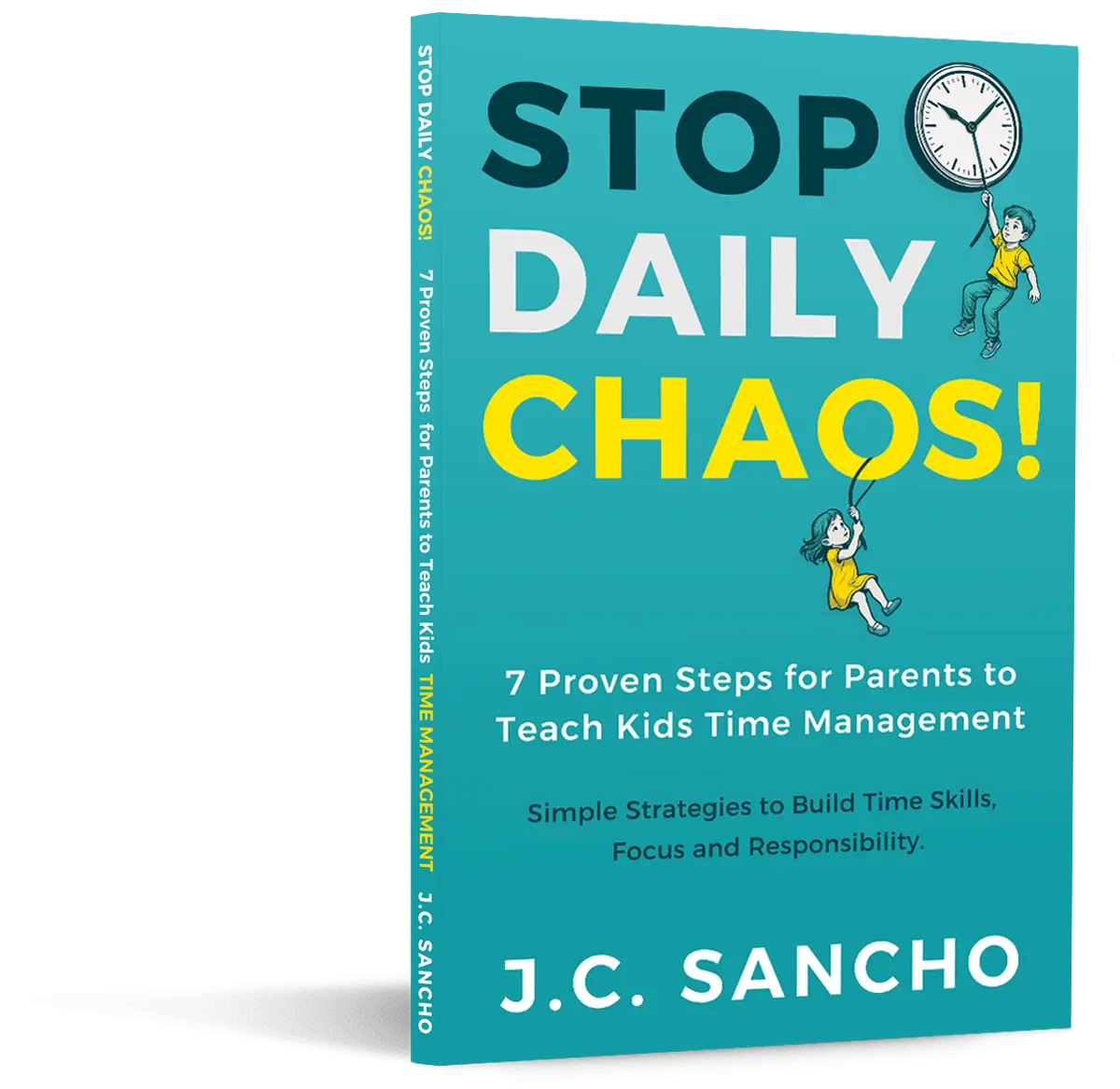
When Intrinsic Motivation in Kids Becomes a Daily Challenge
It’s 7:42 a.m. Your child is still in pajamas, staring at a half-eaten waffle. Their backpack sits open on the floor. You’ve already said, “Shoes on, please,” three times. Nothing is happening. Not defiance exactly. Not distress. Just… nothing.
By afternoon, the same pattern repeats with homework. You sit nearby. The worksheet is simple. Your child is perfectly capable. Yet they slump, drift, argue, or suddenly need a snack, a bathroom break, or a deep philosophical discussion about why school exists.
You know they can do this. So why don’t they want to?
Many parents are told that the goal is to build intrinsic motivation kids carry inside themselves—the drive to act because something matters, feels interesting, or aligns with their values. But in daily life, intrinsic motivation can feel fragile or entirely absent. Without rewards or reminders, some children simply don’t move.
This is where Routines & Systems come in. Not as punishment. Not as rigid control. But as scaffolding that supports child development while intrinsic motivation slowly grows.
When we understand what’s happening underneath “lazy,” “unmotivated,” or “not trying,” we stop escalating and start building structures that actually help.
What Intrinsic Motivation Really Is (And Why It Develops Slowly)
Intrinsic motivation is the internal pull to act without external pressure. It’s the child who practices piano because they like the sound, reads because the story pulls them in, or cleans their desk because clutter feels distracting.
But here’s what often gets missed: intrinsic motivation is not an inborn trait that shows up on demand. It develops over time through repeated experiences of:
- Emotional safety
- Competence and mastery
- Predictable structure
- Reasonable autonomy
In early and middle childhood, the brain systems responsible for planning, initiating tasks, and delaying gratification are still under construction. The prefrontal cortex—the area that helps with organization, follow-through, and long-term thinking—develops gradually into young adulthood.
So when a seven-year-old resists starting homework, it may not be about character. It may be about brain maturity.
Intrinsic motivation grows from repeated experiences of “I can do this” and “This feels meaningful.” Without those experiences, children rely heavily on external structure.
A Recognizable Pattern
A parent might say, “If I don’t stand over him, nothing gets done.”
What’s often happening:
- The task feels vague or overwhelming.
- The child doesn’t know where to start.
- The body feels tired or dysregulated.
- The reward feels too far away.
From the outside, it looks like refusal. From the inside, it can feel like paralysis.
What’s Happening Underneath the Behavior
When intrinsic motivation appears low, there are usually layers underneath. Behavior science tells us that behavior is driven by cues, energy, skill, and perceived payoff.
1. Emotional Safety
Children are more internally motivated when they feel emotionally secure. Chronic criticism, comparison, or pressure can quietly shut down initiative.
A child who hears, “Why can’t you be more responsible?” may stop trying—not because they don’t care, but because trying feels risky.
Emotional safety doesn’t mean no expectations. It means the child’s worth is not tied to performance.
A helpful shift sounds like:
Parent: “I see this is hard to start. Let’s figure out the first small step.”
Instead of:
Parent: “You’re old enough to do this by yourself.”
2. Body Literacy and Regulation
Children often misread their own physical states. Hunger feels like irritability. Tiredness feels like boredom. Anxiety feels like stubbornness.
When a child avoids math every afternoon at 4 p.m., consider the body before the behavior. Blood sugar dips. Mental fatigue builds. The nervous system may be overloaded from the school day.
Body literacy means teaching children to recognize internal signals:
- “My brain feels foggy.”
- “My legs feel wiggly.”
- “My stomach feels tight.”
Once identified, you can respond with systems instead of lectures:
- Scheduled snack before homework
- 10-minute outdoor reset
- Homework at 5 p.m. instead of immediately after school
When energy improves, motivation often follows.
3. Executive Function Gaps
Starting, organizing, and finishing tasks require executive skills. Some children lag in these areas as part of normal child development; others may have conditions like ADHD.
If your child says, “I don’t know what to do,” they may genuinely not know how to break a task down.
Instead of saying, “Just do it,” try:
- Write three steps on a sticky note.
- Set a visible timer for 15 minutes.
- Work side by side for the first five minutes.
These supports are not crutches. They are training wheels.
This article offers general educational guidance. If you notice persistent attention, mood, sleep, or developmental concerns that interfere with daily life, consult a qualified healthcare or mental health professional.
Why Routines & Systems Matter More Than Lectures
Parents often try to motivate with explanations: “Doing homework builds responsibility.” “Cleaning your room shows maturity.”
Children rarely act on abstract logic. They act on cues and structure.
Routines & Systems reduce decision fatigue and remove the need for constant willpower.
A Morning System Example
Instead of repeating instructions:
- Create a simple visual checklist by the door.
- Order it in the sequence your child actually moves through.
- Practice it on a weekend when no one is rushed.
For example:
- Get dressed.
- Eat breakfast.
- Brush teeth.
- Backpack by the door.
- Shoes on.
At first, you may still prompt. Over time, you shift from directing to pointing:
“What’s next on your list?”
The system becomes the authority, not you. Conflict drops because you’re no longer the one pushing.
After-School Reset Routine
Many motivation battles begin immediately after school. Try a predictable decompression block:
- Snack
- 15 minutes outside or movement
- 10-minute quiet reset (drawing, reading, Lego)
- Homework start time
When children know what happens every day, their nervous system relaxes. That relaxation supports effort.
Building Intrinsic Motivation Through Competence
Intrinsic motivation grows when children feel capable. Too easy, and they’re bored. Too hard, and they shut down.
The “Just Manageable” Zone
Imagine your child struggling with reading. If every book is far above their level, motivation collapses. If every book is too simple, it never strengthens.
The sweet spot feels slightly challenging but achievable with effort.
Practical approach:
- Let your child pick from pre-selected appropriate options.
- Use “You read a page, I read a page” for harder texts.
- Celebrate strategy, not speed.
Instead of, “You’re such a good reader,” try:
“You kept going even when that word was tricky. That’s effort.”
Effort-based feedback connects behavior to outcome. Over time, that link becomes internal.
Give Real Responsibility
Children build intrinsic motivation through meaningful contribution.
A seven-year-old can:
- Pack their own lunch with supervision.
- Sort laundry.
- Feed a pet on a schedule.
The key is consistency. If you redo the task every time or step in too quickly, the message becomes: “You’re not really capable.”
Allow imperfect completion. Let natural consequences teach gently. If they forget to pack a spoon, they solve it at school.
Autonomy Without Chaos
Children need some control to build internal drive. Too much control from adults leads to power struggles. Too little structure leads to drift.
Offer Structured Choices
Instead of:
“Do your homework.”
Try:
“Do you want to start with math or reading?”
Instead of:
“Clean your room now.”
Try:
“Do you want to clean for 10 minutes before dinner or 10 minutes after?”
The task remains. The choice creates ownership.
Invite Reflection
After a successful effort, ask:
- “What helped you get started today?”
- “What made that easier?”
This builds metacognition—the ability to notice what works. Over time, children begin to replicate successful strategies independently.
Common Parent Responses That Backfire
Most motivation struggles escalate because of understandable but unhelpful reactions.
Over-Rewarding Everything
Sticker charts and prizes can jump-start behavior. But if every task requires payment, children may lose connection to internal satisfaction.
Use external rewards sparingly and strategically—for new habits or especially hard transitions. Phase them out once routines are stable.
Rescuing Too Quickly
If a child stalls, many parents step in fully.
Example:
Your child stares at their homework. After two minutes, you say, “Fine, I’ll help,” and begin explaining every question.
Better approach:
- Sit nearby.
- Ask them to read the first question aloud.
- Wait.
Silence can feel uncomfortable. It’s often where problem-solving begins.
Labeling the Child
Words like “lazy,” “unmotivated,” or “dramatic” can become self-fulfilling. Children build identity from repeated feedback.
Describe behavior, not character:
“I see you’re having trouble getting started.”
This keeps the door open for change.
When Low Motivation Signals Something More
Sometimes what looks like a motivation problem is something else.
Consider professional guidance if you notice:
- Persistent sadness or irritability lasting weeks.
- Frequent physical complaints with no clear cause.
- Major sleep disruption.
- Sharp academic decline.
- Intense anxiety around performance.
- Attention struggles across multiple settings.
Conditions such as ADHD, anxiety disorders, depression, learning differences, and sleep disorders can all affect task initiation and follow-through.
Early evaluation does not label a child; it clarifies what support will help.
Creating a Home Culture That Supports Motivation
Beyond daily routines, the overall tone of the home shapes intrinsic drive.
Model Effort Out Loud
Let your child hear your process:
“I don’t feel like folding laundry, but I’ll start with five minutes.”
“This recipe is new for me. I might mess up, but I’m going to try.”
This normalizes effort without perfection.
Protect Downtime
Overscheduled children often appear unmotivated at home because their mental energy is depleted elsewhere.
Unstructured play builds creativity and internal initiative. Boredom can be productive when not immediately solved by screens.
Keep Connection Strong
A child who feels securely connected is more likely to cooperate and stretch themselves.
Ten minutes of undivided attention—no phone, no multitasking—can reduce power struggles later in the day.
Connection fuels cooperation more reliably than pressure does.
Putting It All Together on a Hard Day
Let’s return to the 7:42 a.m. moment.
Your child is stalled. Instead of escalating, you:
- Check body needs: “Did you finish breakfast?”
- Point to the visual list.
- Offer a small choice: “Shoes first or backpack first?”
- Stay calm.
Later, during homework, you:
- Provide a snack and movement break.
- Set a 15-minute timer.
- Sit nearby for the first few minutes.
- Acknowledge effort, not outcome.
Nothing dramatic happens. No breakthrough speech. Just steady structure.
Over weeks, those small systems reduce friction. Your child begins starting tasks with less prompting. Not because you lectured better, but because their brain had repeated practice in a safe, predictable environment.
What to Hold Onto
Intrinsic motivation is built, not demanded. It grows from emotional safety, body awareness, manageable challenge, and consistent Routines & Systems.
When a child struggles to start or follow through, the question shifts from “Why won’t you?” to “What support is missing?”
Sometimes the missing piece is sleep. Sometimes clarity. Sometimes connection. Sometimes professional guidance.
Most often, it is structure paired with warmth.
You are not failing if your child needs reminders. You are teaching skills that develop gradually across child development. With steady systems and calm leadership, what feels like daily resistance can slowly transform into competence, and competence into internal drive.
The goal isn’t a child who never needs prompting. It’s a child who, over time, begins to say, “I can handle this,” and then proves it to themselves.