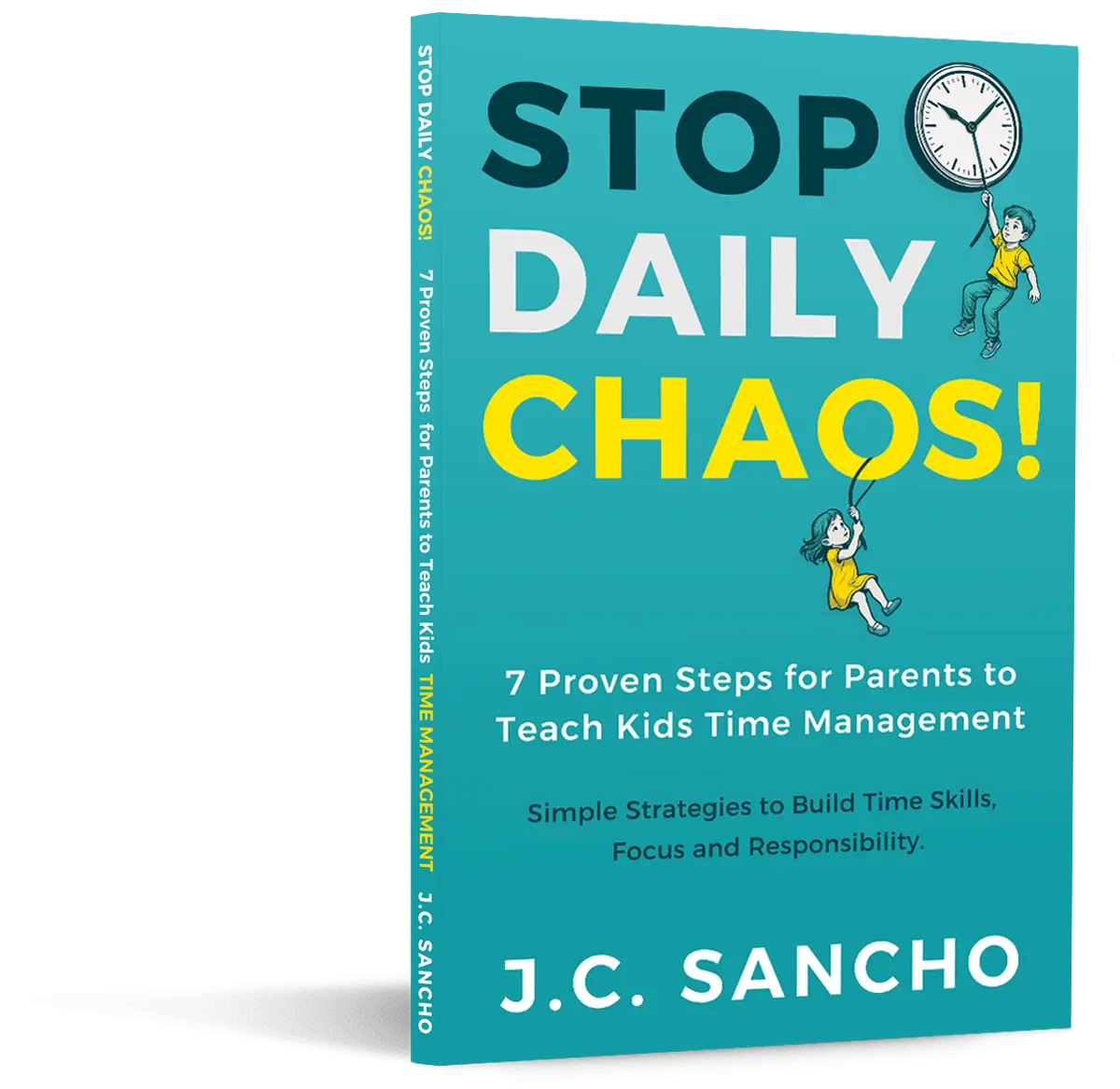
When Time Management Skills for Kids Becomes a Daily Challenge
If your mornings feel like a race against the clock, homework stretches into bedtime, or your teen insists they “lost track of time” again, you are not alone. Many parents find that teaching time management skills to kids is harder than it sounds. It can feel personal, frustrating, even alarming—especially when you worry that poor habits today will become bigger problems tomorrow.
Here’s the reassuring truth: time management is not a personality trait. It is a set of skills rooted in brain development, emotional regulation, and daily structure. Like reading or riding a bike, it can be taught, practiced, and strengthened over time. With the right mix of clarity, compassion, and consistent parenting, children of all ages can learn to manage time in ways that support both their responsibilities and their well-being.
This guide will walk you through what time management really means for kids, why it matters, and how to coach it step by step—without shame, power struggles, or unrealistic expectations.
What Time Management Skills Really Mean (and Why They Matter)
When we talk about time management skills for kids, we’re not just talking about using a planner. We’re referring to a group of executive function skills—mental processes that help children plan, prioritize, initiate tasks, shift attention, and monitor progress. Executive function develops gradually from early childhood into the mid-20s.
For toddlers, time management might look like transitioning between activities without melting down. For elementary-age children, it may involve starting homework independently. For teens, it includes long-term planning for projects, sports, and social commitments.
Research from organizations like the American Academy of Pediatrics (AAP) and the CDC shows that predictable daily structure supports emotional regulation, academic performance, and even sleep quality. Structure reduces decision fatigue—the mental exhaustion that comes from too many choices—and creates a sense of safety. When children know what to expect, their nervous systems settle. A settled nervous system is more capable of focus and follow-through.
Time management, then, is not about squeezing more productivity from a child. It is about helping them:
- Develop internal awareness of time passing
- Plan and break tasks into manageable steps
- Shift between activities with less distress
- Balance responsibilities and rest
- Build confidence through follow-through
When parenting emphasizes skill-building rather than control, children learn that managing time is something they can grow into—not something they are either “good at” or “bad at.”
Build a Daily Structure That Feels Safe, Not Strict
Why Structure Calms the Brain
Children thrive in predictable environments. A consistent daily structure reduces uncertainty, which lowers stress hormones and improves cooperation. Structure is not rigidity; it is a flexible framework.
Think of structure as the container. Within that container, children can make choices and learn responsibility.
Step-by-Step: Creating a Supportive Routine
- Anchor the day around immovable points. Wake time, school hours, meals, and bedtime form the backbone.
- Add predictable transitions. For example: “After snack, we start homework.”
- Use visual supports for younger kids. Picture schedules or simple checklists increase independence.
- Build in buffers. Add 10–15 minutes between activities to prevent rushing.
- Review weekly with older kids and teens. Let them help shape their schedule.
Micro-script for younger children:
“First we put on pajamas, then we read one book. After that, it’s lights out.”
Micro-script for teens:
“Let’s look at your week together. What’s the biggest assignment? When would you feel least stressed starting it?”
Takeaway: Structure creates external scaffolding so children can gradually internalize time management skills.
Teach Time Awareness Through Body Literacy
Many children struggle with time because they cannot feel it. Ten minutes and one hour may seem identical if they are absorbed in a game—or overwhelmed by homework.
Body literacy means helping children notice physical cues: hunger, fatigue, restlessness, focus levels. These cues influence productivity more than most planners do.
Practical Tools
- Time mapping: Ask, “How long do you think this will take?” Then compare to reality.
- Visual timers: Seeing time pass builds internal awareness.
- Energy check-ins: “Is your brain feeling fresh, foggy, or tired?”
- Movement breaks: Short bursts of activity reset attention.
For teens, link body signals to planning:
“You focus better earlier in the evening. Want to tackle math before dinner?”
This approach shifts parenting from command-based (“Just focus”) to skill-based (“Let’s notice what your body needs to focus”).
Takeaway: Time management improves when children understand their internal rhythms.
Break Tasks Into Visible, Doable Steps
Children often avoid tasks not because they are lazy, but because the task feels too big. The brain perceives overwhelm as threat, which triggers avoidance.
How to Scaffold Without Taking Over
- Name the outcome: “Science project due Friday.”
- Break it into parts: research, outline, build, review.
- Assign each part a day.
- Check in briefly, not constantly.
Micro-script:
“What’s the smallest step you can do in the next 15 minutes?”
This builds task initiation, a core executive function skill. Over time, children internalize the habit of breaking down challenges independently.
Takeaway: Smaller steps reduce anxiety and increase momentum.
Shift From Control to Coaching in Parenting
When time management becomes a daily battle, it’s easy to move into nagging or rescuing. Both undermine learning. Coaching invites ownership.
Coach-Like Questions
- “What’s your plan?”
- “What might get in the way?”
- “What could you try differently tomorrow?”
Instead of: “You’re always late.”
Try: “What would help mornings feel smoother?”
Children are more likely to build time management skills when they feel emotionally safe. Emotional safety means they can make mistakes without humiliation.
Takeaway: Skill-building thrives in connection, not criticism.
Use Natural Consequences Thoughtfully
Consequences teach best when they are predictable and proportionate. If a teen forgets to submit homework, the school’s late policy may be enough. Avoid layering extra punishment unless safety is at risk.
Before consequences, ask: Is this a skill gap or a motivation issue? Skill gaps need teaching, not penalties.
Micro-script:
“Looks like turning it in late affected your grade. What’s your plan to avoid that next time?”
Takeaway: Reflection turns consequences into learning opportunities.
Where Families Often Get Stuck (and How to Reset)
1. Expecting Adult-Level Planning
Executive function develops gradually. A 7-year-old cannot plan like a 17-year-old. Adjust expectations to developmental stage.
2. Over-Scheduling
Too many activities reduce downtime, which is essential for brain consolidation and creativity. Protect unstructured time.
3. Confusing Compliance With Skill
A child who follows orders may not be learning planning skills. Aim for gradual independence.
4. Ignoring Sleep and Nutrition
Sleep deprivation significantly impairs executive function, according to research from the CDC and sleep medicine experts. Consistent bedtimes and balanced meals are foundational.
Reset Strategy Checklist:
- Revisit routines
- Reduce one commitment
- Add visual supports
- Hold weekly planning chats
- Prioritize sleep
Deepening the Work: Raising a Future-Oriented Thinker
Long-term time management is less about schedules and more about identity. Children who see themselves as capable planners are more likely to act accordingly.
Encourage future thinking:
- “How will finishing this early feel tomorrow?”
- “What kind of student/teammate/friend do you want to be?”
Model your own planning aloud:
“I’m packing my bag now so tomorrow morning feels calm.”
This transparency demystifies adult time management. It shows that planning is a strategy, not magic.
Over time, shift from external reminders to internal reflection. Weekly check-ins can become self-led reviews in adolescence.
Remember: consistency beats intensity. Small daily habits shape lifelong patterns.
Quick Answers Parents Often Ask
At what age should kids manage their own time?
Children can begin participating in simple routines as toddlers. Full independence develops gradually through adolescence. The goal is progressive responsibility, not sudden autonomy.
What if my child has ADHD?
Children with ADHD often need more explicit structure, visual supports, and shorter work intervals. Evidence-based behavioral strategies are highly effective. Consult a pediatrician or psychologist for individualized guidance.
How do I reduce constant reminders?
Shift reminders to systems. Use checklists, alarms, or calendars. Then respond with, “What does your system say?” instead of repeating instructions.
This article is for educational purposes only and does not replace medical or mental health advice.
Further Reading
- American Academy of Pediatrics – HealthyChildren.org (executive function and routines)
- Centers for Disease Control and Prevention – Child Development Basics
- Child Mind Institute – Executive Function Resources
- Mayo Clinic – Children’s Health and Sleep Guidance
A Steady Path Forward
If time management feels like a daily struggle in your home, take heart. You are not failing at parenting, and your child is not broken. They are learning a complex set of skills that take years to mature.
Start small. Strengthen daily structure. Teach awareness. Break tasks down. Replace lectures with coaching. Celebrate effort more than perfection.
Time management skills for kids are built in ordinary moments—packing backpacks, setting timers, planning weekends. With clarity, compassion, and steady guidance, those moments become the foundation for capable, confident adults.