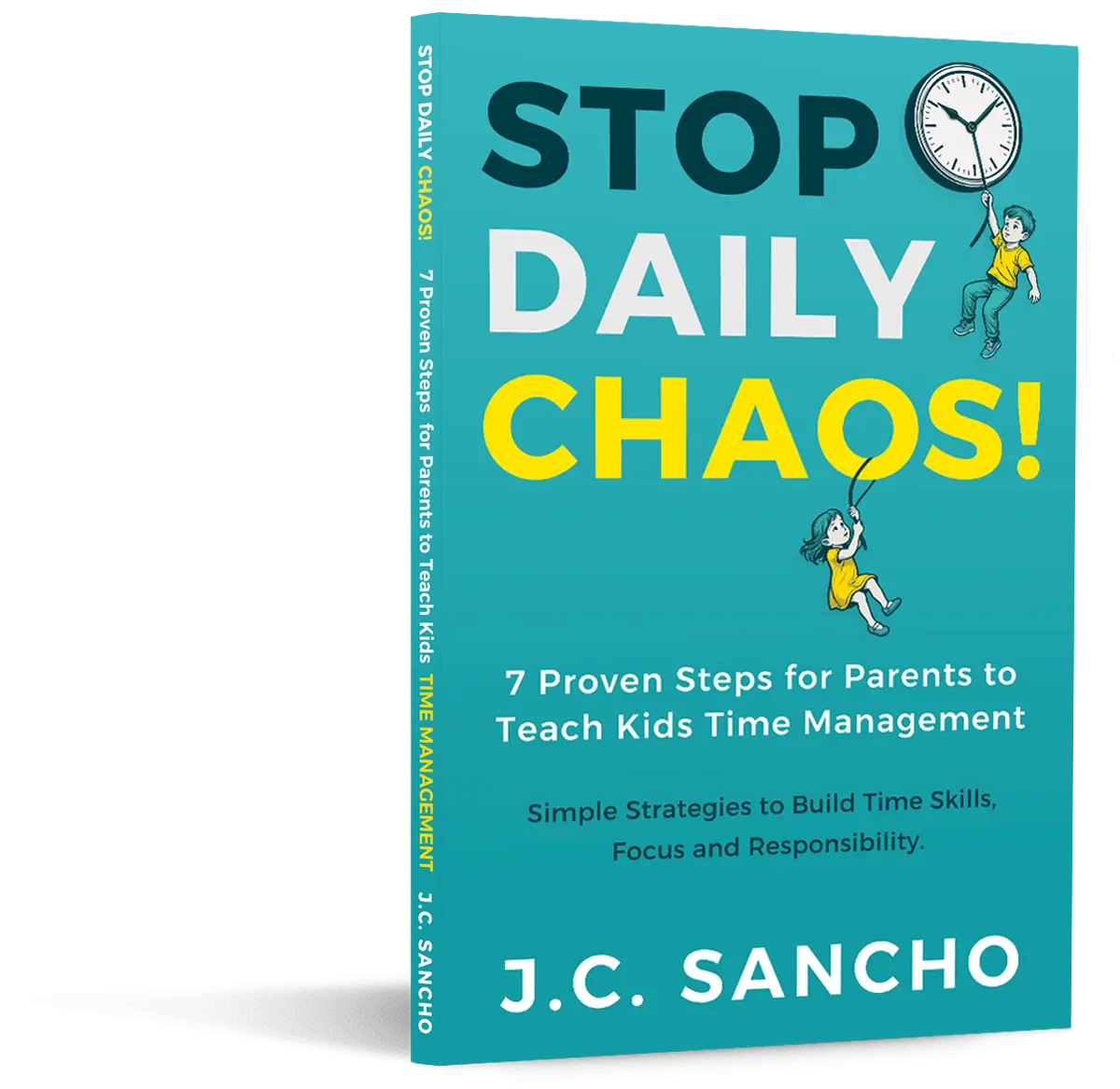
How Time Management Skills for Kids Affects Child Development
If your mornings feel rushed, homework turns into nightly friction, or your teen insists they “forgot” again, you are not alone. Many parents quietly wonder whether their child just isn’t organized—or whether something deeper is at play. The truth is that time management skills for kids are not about color-coded planners or perfectly tidy backpacks. They are about brain development, emotional safety, and the invisible rhythms that shape family systems.
When children learn how to understand and manage time, they gain far more than punctuality. They build executive function, emotional regulation, resilience, and self-trust. These skills influence academic success, friendships, stress levels, and long-term mental health. The good news: time management is teachable. And it begins with connection, clarity, and practical steps that fit your real life.
What Time Management Skills Really Mean—and Why They Matter
Time management skills for kids refer to the ability to understand time, estimate how long tasks take, prioritize responsibilities, transition between activities, and plan ahead. Underneath these behaviors are executive functions—brain-based processes such as working memory, impulse control, and cognitive flexibility. These skills develop gradually from toddlerhood through young adulthood.
For toddlers, time management looks like learning predictable routines. For elementary-age children, it might mean packing a backpack independently. For teens, it involves juggling assignments, social commitments, and rest. Each stage builds on the previous one.
Research from organizations like the American Academy of Pediatrics (AAP) and Child Mind Institute shows that structured routines and consistent expectations support emotional regulation and academic growth. Children who feel grounded in time and rhythm tend to experience less anxiety and fewer power struggles.
In healthy family systems, time is shared and respected. When parents model calm planning instead of urgency or chaos, children internalize that sense of steadiness. Time becomes a supportive framework—not a source of stress.
Start with Predictable Rhythms: The Foundation of Regulation
Why rhythms matter
Young brains crave predictability. Routines help regulate the nervous system—the body’s stress-response system. When children know what comes next, their brains conserve energy for learning and connection instead of scanning for threat.
How to build simple daily anchors
- Keep wake-up and bedtime within a consistent window.
- Create a short, repeatable morning checklist (dress, brush teeth, breakfast, backpack).
- Establish a predictable after-school flow (snack, decompress, homework, play).
- Use visual schedules for younger children.
Micro-script: “First we put on shoes, then we grab backpacks. After school, we snack and rest before homework.”
Takeaway: Consistency builds safety. Safety supports learning.
Teach Time Awareness, Not Just Time Obedience
From abstract to concrete
Time is abstract. Young children cannot “feel” fifteen minutes. Helping them develop body literacy—the ability to notice internal cues like hunger, fatigue, or focus—supports more accurate time awareness.
Practical steps
- Use timers visually. Sand timers or digital countdowns make time visible.
- Practice estimation games: “How long do you think this puzzle will take?”
- Reflect afterward: “It took ten minutes. What helped you focus?”
- Link time to body cues: “Your body looks tired. That tells us it’s close to bedtime.”
Micro-script: “You have 20 minutes to play. When the timer beeps, we’ll clean up together.”
Takeaway: Children learn time best through experience and reflection, not lectures.
Break Tasks into Brain-Sized Steps
Many conflicts around time are actually overwhelm. Executive function develops slowly; expecting a child to “just manage it” sets everyone up for frustration.
Chunking method
- Define the outcome clearly (“Homework done”).
- List 3–5 specific steps (“Open folder, complete math page, check answers, pack folder”).
- Estimate time per step.
- Celebrate completion of each chunk.
For teens, use backward planning. If a project is due Friday, ask: “What needs to happen Thursday? Wednesday?” Write it down.
Micro-script: “Let’s make this smaller. What’s the very first step?”
Takeaway: Breaking tasks down reduces stress and increases follow-through.
Use Natural Consequences Within a Safe Family System
In supportive family systems, consequences teach rather than shame. If a child forgets homework, the natural consequence might be explaining it to the teacher—not a long lecture at home.
Calm tone matters. Shame activates the stress response, which actually reduces executive functioning. Instead, focus on problem-solving.
Micro-script: “It looks like the assignment didn’t make it to school. What system could help tomorrow?”
Takeaway: Learning sticks when children feel respected and capable.
Model the Skills You Want to See
Children learn time management through observation. If adults constantly rush, multitask frantically, or complain about being overwhelmed, children absorb that narrative.
Simple modeling strategies
- Say your plan aloud: “I’m checking my calendar before saying yes.”
- Pause before committing to activities.
- Schedule rest visibly.
- Admit mistakes calmly: “I overbooked today. Next time I’ll check first.”
Takeaway: Modeling calm planning teaches more than instructions ever could.
Support Emotional Safety During Transitions
Transitions are where many time struggles happen—turning off screens, leaving playdates, starting homework. Resistance often reflects nervous system activation, not defiance.
Transition toolkit
- Give 5-minute warnings.
- Offer limited choices: “Shower before or after pajamas?”
- Use connection before correction: brief eye contact, gentle touch.
- Validate feelings without changing limits.
Micro-script: “It’s hard to stop playing. I get that. The timer says it’s homework time.”
Takeaway: Emotional attunement reduces power struggles.
Calibrate Expectations by Age
Time management skills for kids develop unevenly. A toddler cannot plan ahead. A middle-schooler may need scaffolding for long-term projects. Teens’ prefrontal cortex—the planning center—continues developing into their mid-20s.
- Ages 2–4: Focus on routines and visual cues.
- Ages 5–8: Introduce simple checklists and timers.
- Ages 9–12: Teach planning tools and weekly previews.
- Teens: Shift toward coaching, not controlling.
Takeaway: Developmental readiness matters more than comparison.
Where Parents Commonly Get Stuck (And How to Reset)
Over-controlling
Micromanaging every step can prevent independence. Reset by gradually transferring responsibility.
Expecting instant mastery
Executive skills take years to refine. Repetition and patience are essential.
Using shame as motivation
Statements like “Why can’t you be organized?” increase anxiety and reduce performance. Replace with curiosity.
Ignoring body basics
Sleep deprivation, hunger, or overstimulation impair time awareness. According to the CDC, consistent sleep significantly affects attention and mood. Start with physical regulation before behavioral correction.
Reset question: “Is this a skill gap, a will gap, or a regulation gap?”
Deepening the Practice: Connection, Mindset, and Long-Term Habits
At its heart, time management is about agency—the belief that “I can influence my day.” Children who feel competent with time develop stronger self-efficacy and resilience.
Shift from control to coaching
Instead of dictating schedules, collaborate. Hold weekly family check-ins. Ask: “What’s coming up? What might feel busy?”
Build reflective habits
After stressful days, ask: “What worked today? What felt rushed?” Reflection wires the brain for growth.
Honor rest as productive
In forward-thinking family systems, downtime is scheduled, not accidental. Rest supports memory consolidation and emotional regulation.
Encourage long-term thinking gently
For teens, discuss future goals and backward-plan without pressure. “If college applications open in August, what might help us feel ready?”
Takeaway: Sustainable habits grow from collaboration and reflection, not fear.
Questions Parents Often Ask
What if my child has ADHD or anxiety?
Children with ADHD or anxiety may struggle more with executive function. Structured routines, visual tools, and shorter task blocks are especially helpful. Consider consulting a pediatrician or licensed professional for tailored support. (This article is for educational purposes and not a substitute for medical advice.)
How long does it take to see improvement?
Small shifts can appear within weeks, but lasting habits take months or years. Focus on progress, not perfection.
Should I use rewards?
External rewards can jump-start new habits but should not replace intrinsic motivation. Pair praise with skill-building: “You planned ahead—that shows responsibility.”
What if my teen resists structure?
Invite collaboration rather than imposing control. Teens respond better to shared planning than commands.
Further Reading
- American Academy of Pediatrics (AAP) – HealthyChildren.org
- Centers for Disease Control and Prevention (CDC) – Sleep and Child Development
- Child Mind Institute – Executive Function Resources
- Mayo Clinic – Child Development Milestones
Teaching time management skills for kids is not about raising productivity machines. It is about raising grounded, capable humans who trust themselves. When you approach time with clarity, compassion, and consistency, your child learns more than scheduling. They learn that structure can feel safe, that mistakes are solvable, and that growth happens step by step.
Your family system does not need to be perfect. It needs to be responsive. Start small. Pick one rhythm to strengthen this week. Notice what shifts. Over time, those small anchors create steadiness that carries your child into adulthood—with confidence, resilience, and a healthy relationship to time.