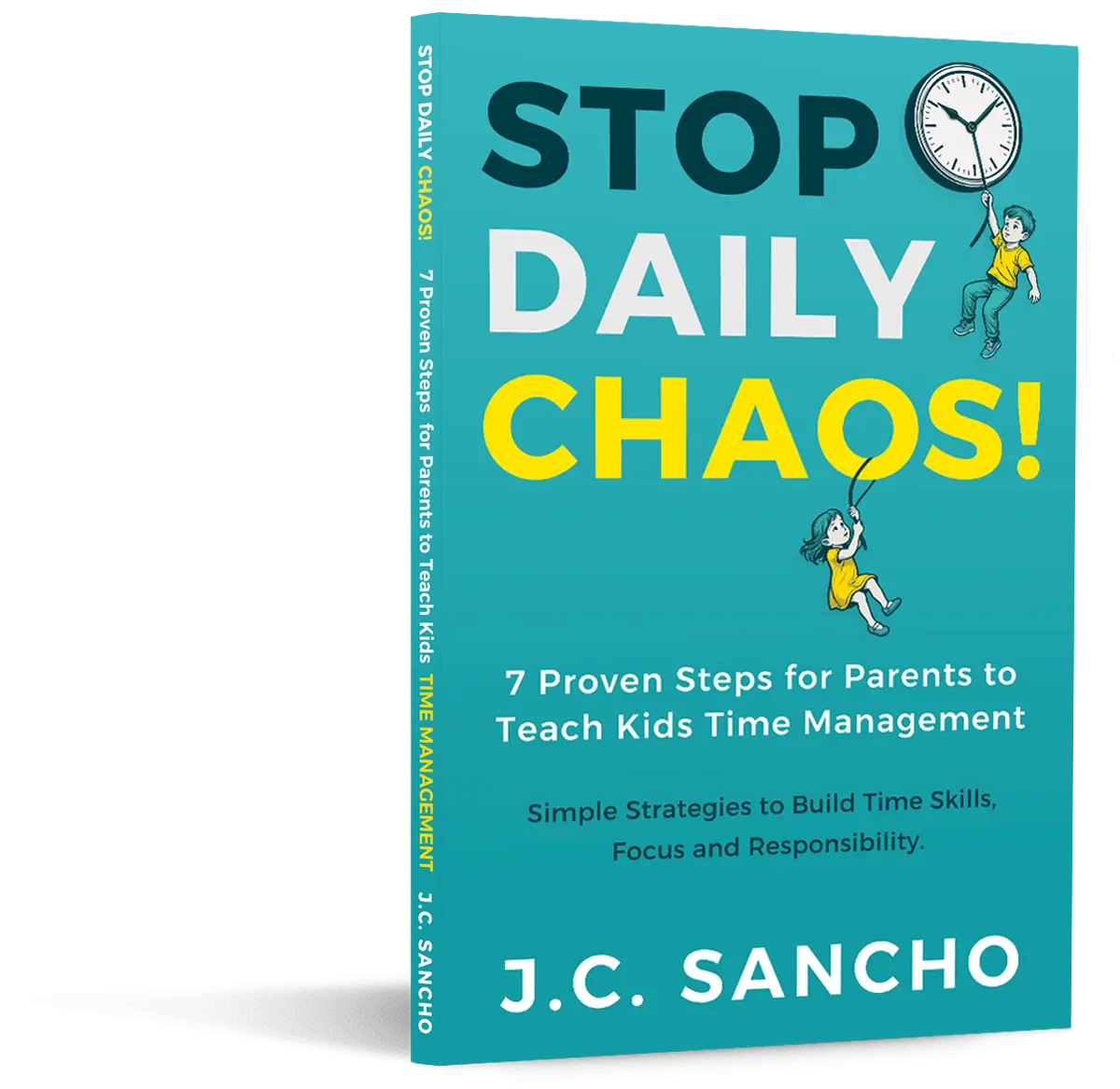
What Really Helps With Time Management Skills for Kids
If mornings feel rushed, homework stretches into bedtime, or your teen insists they “forgot” another deadline, you’re not alone. Many parents worry their child lacks motivation or responsibility when the real issue is simpler—and more solvable. Time management skills for kids are not personality traits. They are developmental skills that grow with guidance, practice, and thoughtful behavior support.
When we shift from “Why can’t you just manage your time?” to “What skills are missing and how can I teach them?”, everything changes. Children feel safer. Parents feel more effective. And daily life becomes less about nagging and more about teamwork.
This guide offers clear definitions, practical steps, and compassionate scripts you can use today—whether you’re parenting a preschooler who dawdles or a teen juggling academics, sports, and social life.
What Time Management Skills Really Are—and Why They Matter
Time management skills for kids include planning, prioritizing, estimating how long tasks take, transitioning between activities, and following through. Underneath those abilities are executive functions—the brain-based skills that help us organize, regulate attention, and manage impulses.
Executive functions develop gradually from early childhood into the mid-20s. The American Academy of Pediatrics notes that children’s brains are still wiring the systems responsible for planning and self-control well into adolescence. That means struggles with time are often developmental, not defiant.
Why it matters:
- Reduces daily stress. Predictable routines lower anxiety and power struggles.
- Builds academic success. Planning and follow-through improve school performance.
- Supports emotional regulation. Fewer rushed transitions mean fewer meltdowns.
- Strengthens independence. Kids who manage time gain confidence in their competence.
Time management is not about squeezing productivity from children. It’s about helping them feel capable and steady in their days.
Start With Emotional Safety and Body Literacy
Before introducing planners or chore charts, start with regulation. A dysregulated nervous system cannot learn new skills efficiently. Body literacy—the ability to notice hunger, fatigue, overstimulation, or stress—directly affects time management.
Step 1: Check the basics
- Is your child getting adequate sleep for their age?
- Are meals and snacks predictable?
- Are transitions supported rather than abrupt?
When a child melts down at homework time, it may be exhaustion, not avoidance. Behavior support begins with asking, “What is my child’s body telling us?”
Micro-script for co-regulation
“I notice homework feels hard right now. Let’s take two minutes to breathe and reset. Then we’ll choose the first small step together.”
Takeaway: Emotional safety is the foundation of effective time management skills for kids.
Make Time Visible and Concrete
Children struggle with abstract time concepts. “Ten minutes” means little to a five-year-old—and often not much more to a teenager scrolling on a phone.
Tools that work
- Visual timers (countdown clocks or sand timers)
- Color-coded daily schedules
- Morning and bedtime routine charts
- Shared family calendars for older kids
How to implement
- Choose one predictable part of the day (e.g., morning routine).
- Break it into 3–5 clear steps.
- Attach a visual timer to each step.
- Practice together for a week before expecting independence.
Micro-script
“You have 15 minutes to get dressed. When the timer turns yellow, that means five minutes left.”
Takeaway: When time becomes visible, children can organize around it more successfully.
Teach Planning in Small, Repeatable Moves
Planning is not innate. It must be modeled and practiced. Many parents assume children know how to break tasks into steps—but that skill requires explicit instruction.
The “Plan Backwards” Method (for school-age kids and teens)
- Identify the due date.
- Estimate how long the task might take.
- Divide into smaller chunks.
- Schedule each chunk on specific days.
Example: A science project due Friday becomes research on Monday, outline Tuesday, draft Wednesday, finalize Thursday.
Micro-script
“Let’s look at this project together. If Friday is the finish line, what’s the first small step we can take today?”
Takeaway: Planning reduces overwhelm by transforming “big” into doable.
Use Behavior Support Instead of Punishment
Behavior support means adjusting the environment to make success easier. Instead of punishing missed deadlines, look at what skill or structure is missing.
Behavior support checklist
- Clear expectations stated in advance
- Predictable routines
- Visual reminders
- Chunked tasks
- Positive reinforcement for effort
Reinforcement does not mean bribery. It means noticing progress.
Micro-script
“I saw you start your reading without being reminded. That shows real responsibility.”
According to behavior science research, specific praise increases the likelihood of repeated behavior. Children repeat what feels successful.
Takeaway: Support the skill gap; don’t shame the struggle.
Build Transition Muscles
Transitions are where time management often breaks down. Moving from play to homework or from screens to bedtime can trigger resistance.
Three-step transition strategy
- Give advance warning (“Ten minutes until cleanup”).
- Offer a choice within limits (“Do you want to start with blocks or books?”).
- Connect before directing (“I know you’re deep into your game.”).
Transitions improve when children feel seen, not abruptly controlled.
Takeaway: Smooth transitions conserve emotional energy for the next task.
Digital Boundaries That Actually Help
For teens especially, devices distort time perception. Endless scrolling disrupts internal clocks and sleep cycles.
Healthy digital guardrails
- Create tech-free homework blocks.
- Use app timers or device downtime settings.
- Charge phones outside bedrooms at night.
- Co-create agreements instead of imposing rules unilaterally.
Micro-script
“Your brain deserves focused time and true rest. Let’s build a phone plan that supports your goals.”
Takeaway: Digital structure protects attention and sleep—both essential for time management skills kids need.
Where Parents Get Stuck (And How to Shift)
The “They Should Know This by Now” Trap
Development is uneven. A child may excel academically yet struggle with organizing a backpack. Replace judgment with curiosity.
The Over-Rescue Cycle
When parents fix forgotten items or complete assignments, children miss practice opportunities. Support without removing responsibility.
The All-or-Nothing Approach
Expecting total independence too quickly leads to conflict. Gradual release works better: “I do, we do, you do.”
Navigation tip: Progress over perfection. Skill-building is iterative.
Deepening the Work: Mindset, Identity, and Long-Term Habits
Over time, time management becomes part of identity. Children internalize messages about whether they are “lazy” or “capable.” Language matters.
Shift from outcome praise (“You’re so organized”) to process praise (“You broke that into steps—that’s smart planning”). This builds a growth mindset, a concept supported by decades of educational psychology research.
Invite reflection:
- “What helped that go smoothly?”
- “What might you try differently next time?”
Reflection strengthens metacognition—thinking about thinking—which is central to executive function development.
Connection is the anchor. A child who feels securely attached is more willing to attempt hard skills. Even teens benefit from brief daily check-ins without correction or critique.
Long-term view: You are not just managing homework. You are shaping how your child approaches goals, stress, and self-trust.
Quick Answers Parents Often Need
At what age should kids manage time independently?
Independence grows gradually. Young children need heavy scaffolding. By middle school, many can handle structured planning with oversight. Full independence often develops through late adolescence.
What if my child has ADHD?
ADHD affects executive function, including time perception and task initiation. Structured routines, visual supports, and consistent reinforcement are especially important. Consider consulting a pediatrician or psychologist for individualized guidance.
How long does it take to see improvement?
With consistent behavior support, small changes often appear within weeks. Deep skill-building takes months and ongoing practice.
Further Reading
- American Academy of Pediatrics – Executive Function and School Success
- CDC – Child Development Basics
- Child Mind Institute – Building Executive Function Skills
- Mayo Clinic – Positive Parenting Strategies
This article is for educational purposes only and is not a substitute for medical or mental health advice.
Growing Skills, Growing Confidence
Time management skills for kids are not built through pressure. They grow through clarity, repetition, emotional safety, and steady belief in a child’s capacity. When you slow down enough to teach the process—not just demand the outcome—you give your child something far more lasting than punctual mornings.
You give them tools for adulthood.
And perhaps just as important, you protect your relationship along the way.