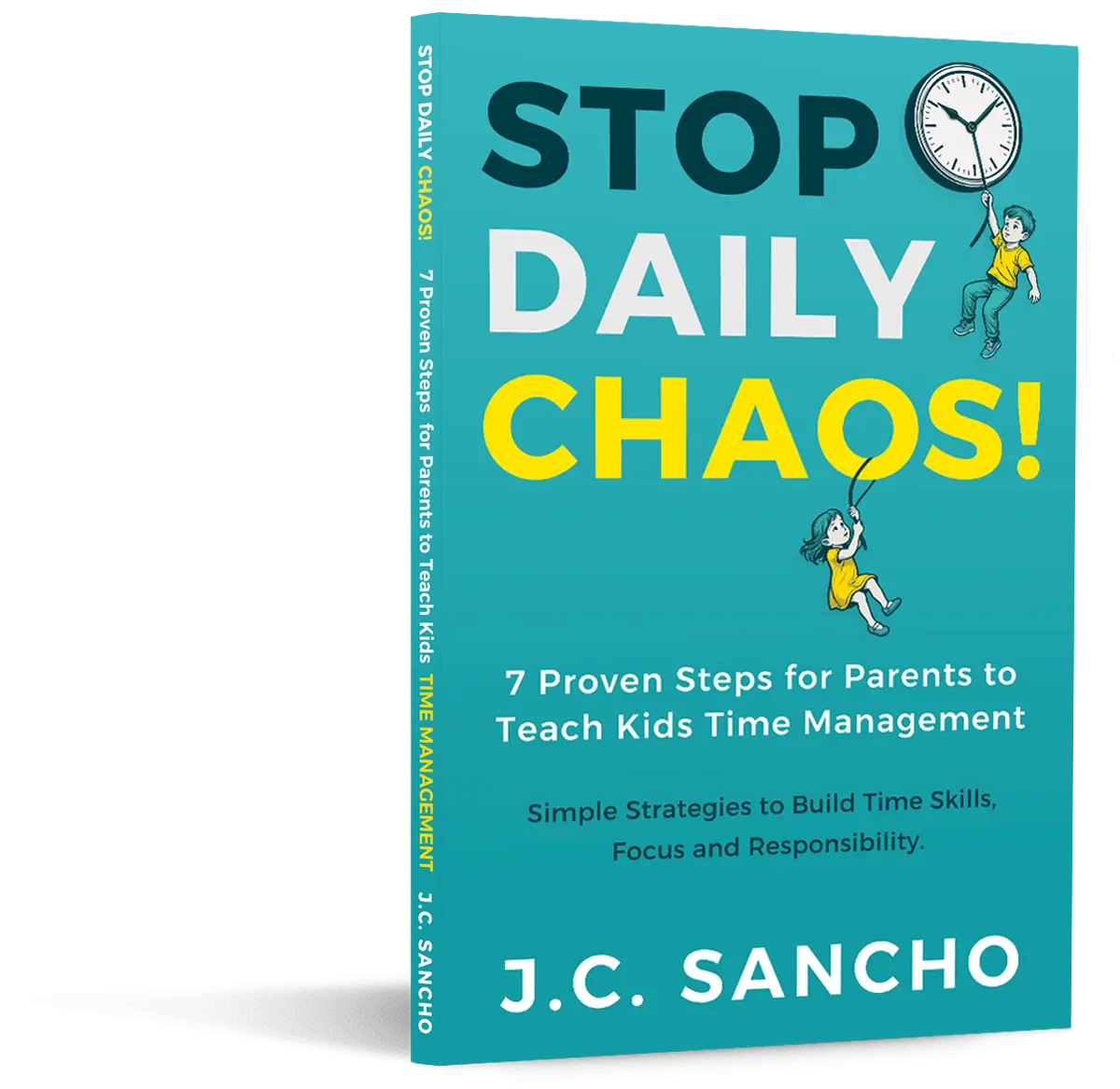
Common Parenting Mistakes Around Daily Routines for Young Children
If mornings feel rushed, bedtime turns into a negotiation marathon, or your child melts down over what seems like “nothing,” you’re not failing. You’re likely dealing with something far more ordinary: unclear or inconsistent daily routines. For toddlers, teens, and everyone in between, routines are not about control. They are about safety, predictability, and connection.
Many parents assume routines are rigid schedules or Pinterest-perfect charts. In reality, healthy daily routines for young children are flexible frameworks that support emotional regulation, cooperation, and family harmony. When routines work, behavior improves. When they don’t, stress rises—for everyone.
This guide will walk you through common parenting mistakes around routines, grounded in behavior science, body literacy, and family systems thinking. You’ll find practical steps, realistic micro-scripts, and compassionate recalibrations you can use immediately.
What Daily Routines Really Are—and Why They Matter So Much
Daily routines are predictable sequences of activities that happen in roughly the same order each day—wake-up, meals, school prep, play, homework, wind-down, sleep. For young children especially, routines act as external scaffolding for internal skills they haven’t yet developed, like time management, impulse control, and emotional regulation.
From a behavior science perspective, predictability lowers cognitive load. When children know what comes next, their brains can focus on participation instead of vigilance. The American Academy of Pediatrics consistently highlights the link between structured routines and better sleep, emotional regulation, and academic outcomes.
From a family systems perspective—the idea that families function as interconnected emotional units—routines serve as the rhythm that keeps everyone regulated. When one part of the system is chaotic, the whole system feels it. Clear routines stabilize the entire family ecosystem.
And from a body literacy lens—the ability to understand and respond to internal cues like hunger, fatigue, and sensory overwhelm—routines teach children to notice patterns in their bodies. “We eat lunch at noon” helps a child connect the sensation of hunger with a predictable response. Over time, they internalize those rhythms.
Why it matters:
- Improves emotional safety and reduces anxiety
- Decreases power struggles and oppositional behavior
- Supports sleep and nervous system regulation
- Strengthens executive functioning skills
- Creates shared expectations within the family system
Routines are not about perfection. They are about nervous system stability.
Mistake #1: Confusing Routines with Rigid Schedules
A common parenting mistake is over-scheduling or enforcing routines so strictly that they become brittle. Children thrive on predictability—but not pressure.
What This Looks Like
- Meltdowns when plans change slightly
- Parents feeling anxious if the clock is off
- No flexibility for developmental differences
Young children, especially toddlers, operate on rhythm more than clock time. A routine is “bath, pajamas, books, bed”—not “7:02 p.m. exactly.”
How to Recalibrate
- Anchor the sequence, not the minute. Focus on order of events.
- Build in buffer time. Expect transitions to take longer than you think.
- Normalize small shifts. “Tonight Grandma’s visiting, so we’ll do bath after dinner. The order changes, but bedtime still comes.”
Micro-script: “Our routine helps our bodies know what’s next. Sometimes the timing shifts, and we can handle that together.”
Takeaway: Flexibility inside structure builds resilience.
Mistake #2: Ignoring Developmental and Body Cues
Another mistake is assuming one routine fits all ages—or all children. Toddlers, preschoolers, teens, and neurodivergent children have different regulatory needs.
Behavior science tells us behavior is communication. A meltdown at 5 p.m. is rarely defiance. It is often hunger, fatigue, or sensory overload.
Body Literacy Checkpoints
- Does my child eat at predictable intervals?
- Are transitions happening when they’re overtired?
- Is there enough physical movement built into the day?
- Are sensory needs (quiet, stimulation, alone time) respected?
Research shows overtired children exhibit more oppositional behavior. The CDC notes that sleep duration strongly impacts mood and attention.
Step-by-Step Reset
- Track 3–5 days of meltdowns or conflicts.
- Look for timing patterns (before dinner, after school).
- Adjust the routine upstream—earlier snack, decompression time, shorter errands.
Micro-script: “Your body looks tired. Let’s rest before we try again.”
Takeaway: When routines align with biology, behavior improves.
Mistake #3: Expecting Compliance Without Teaching the Routine
Many parents assume children “know the drill.” But routines must be explicitly taught, rehearsed, and revisited.
Executive functioning—the brain’s management system—develops slowly. Young children need visual, verbal, and experiential repetition.
How to Teach a Routine Effectively
- Co-create it. “What do we need to do before school?”
- Use visuals. Simple picture charts for young children.
- Practice during calm moments. Not during crisis.
- Model it. Let them see you follow routines too.
Micro-script: “Let’s practice our bedtime steps so your brain knows them.”
Instead of repeating commands, point to the chart and ask, “What’s next?” This shifts responsibility gently to the child while maintaining emotional safety.
Takeaway: Teaching builds independence. Nagging builds resistance.
Mistake #4: Over-Talking During Transitions
Transitions are neurologically demanding. When parents add lectures, reasoning, or threats, children’s stress increases.
In moments of dysregulation, the thinking brain (prefrontal cortex) is less accessible. Short, clear cues work better.
Transition Toolkit
- Give 5-minute and 2-minute warnings
- Use consistent language (“It’s clean-up time.”)
- Offer a limited choice (“Blocks or cars first?”)
- Connect before redirecting
Micro-script: “I know stopping is hard. I’ll help you.”
Connection first lowers resistance. Then structure supports follow-through.
Takeaway: Fewer words, more calm presence.
Mistake #5: Inconsistent Boundaries Inside the Family System
In many households, one caregiver enforces routines while another bends them. This inconsistency creates confusion and tension within the family system.
Children are perceptive. If routines vary unpredictably between adults, they test limits—not out of manipulation, but to find stability.
Family Alignment Checklist
- Agree on non-negotiables (sleep time, screen limits, meal expectations)
- Clarify flexible areas (weekend variations)
- Use shared language
- Debrief privately, not in front of the child
Micro-script between adults: “Let’s revisit our bedtime plan so we’re consistent.”
Consistency does not mean harshness. It means predictability.
Takeaway: Alignment between caregivers reduces behavioral friction.
When Routines Backfire: Hidden Traps to Notice
Sometimes routines increase stress rather than reduce it. Here’s where parents often get stuck.
1. Using Routines as Control
If routines become tools for power (“Because I said so”), children resist. Shift toward collaboration where possible.
2. Ignoring Emotional Repair
A smooth schedule means little if emotional ruptures aren’t repaired. After conflict, reconnect: “That was hard. I’m glad we’re okay.”
3. Forgetting Play and Joy
Over-structured days crowd out creativity. Unstructured play supports brain development and stress recovery.
4. Expecting Immediate Results
New routines take 2–4 weeks to stabilize. Consistency over intensity wins.
Navigation strategy: Adjust gradually. Change one routine at a time and monitor impact.
Deepening the Practice: Connection, Mindset, and Long-Term Habits
Strong daily routines for young children are not just logistical—they are relational.
When a parent kneels at eye level during bedtime, uses a predictable tone, and maintains warmth even during resistance, the routine becomes a container for connection. Emotional safety is built through repetition.
Mindset Shifts That Change Everything
- From control to coaching. Guide rather than command.
- From behavior to nervous system. Ask, “What does their body need?”
- From short-term obedience to long-term skills.
Routines shape identity. A child who hears, “In our family, we take care of our bodies,” internalizes health as part of who they are.
For teens, routines evolve into shared agreements. Invite collaboration: “What helps you wind down so sleep comes easier?” Respect autonomy while maintaining boundaries.
Over time, routines teach:
- Self-regulation
- Time awareness
- Responsibility
- Emotional repair
These are lifelong assets.
Quick Clarity: Questions Parents Often Ask
How many routines are too many?
Focus on anchor points: morning, after school, bedtime. If the day feels over-scripted, simplify.
What if my child resists every routine?
Resistance signals mismatch or lack of connection. Revisit body needs, co-create steps, and strengthen emotional connection before enforcing.
Do routines work for neurodivergent children?
Often, yes—and they may need even more predictability. Visual supports and sensory accommodations are especially helpful.
What about weekends and travel?
Maintain core anchors (sleep and meals) while loosening other elements. Predictable rhythms matter more than identical schedules.
Building Rhythms That Support the Whole Family
Daily routines are not about producing perfectly behaved children. They are about cultivating calm, capable humans within stable family systems.
If you’ve made mistakes around routines, you’re in good company. Every family recalibrates. What matters is your willingness to notice patterns, adjust compassionately, and model flexibility.
Start small. Choose one transition that feels tense. Clarify the sequence. Teach it calmly. Stay consistent. Repair when needed.
Over time, your home will feel less reactive and more rhythmic. Your child will know what to expect. And you will feel more grounded in your role—not as a controller of behavior, but as a steady guide.
You don’t need perfection. You need clarity, compassion, and repetition.
Further Reading
- American Academy of Pediatrics (AAP) – HealthyChildren.org: Sleep and routines guidance
- Centers for Disease Control and Prevention (CDC) – Child development milestones
- Harvard Center on the Developing Child – Executive function research
- Child Mind Institute – Behavior and emotional regulation resources
This article is for educational purposes only and is not a substitute for individualized medical or mental health advice.